
How to Stop Your Car Burning Oil
Last Updated: November 17, 2026
Quick Summary
Your car is burning oil because worn parts let oil past seals and rings into the combustion chamber. High-mileage engines are most often affected, typically through worn piston rings, tired valve seals, and a blocked PCV valve. Burning oil vanishes inside the engine and exits as blue smoke.
- A leak drips onto your driveway, while burning oil vanishes inside the engine as blue smoke.
- Worn piston rings can show as blue smoke, poor compression, and oil-fouled spark plugs.
- Blue smoke at cold start usually means valve seals; under acceleration, piston rings.
- Fast oil loss can foul spark plugs, damage the catalytic converter, and raise emissions.
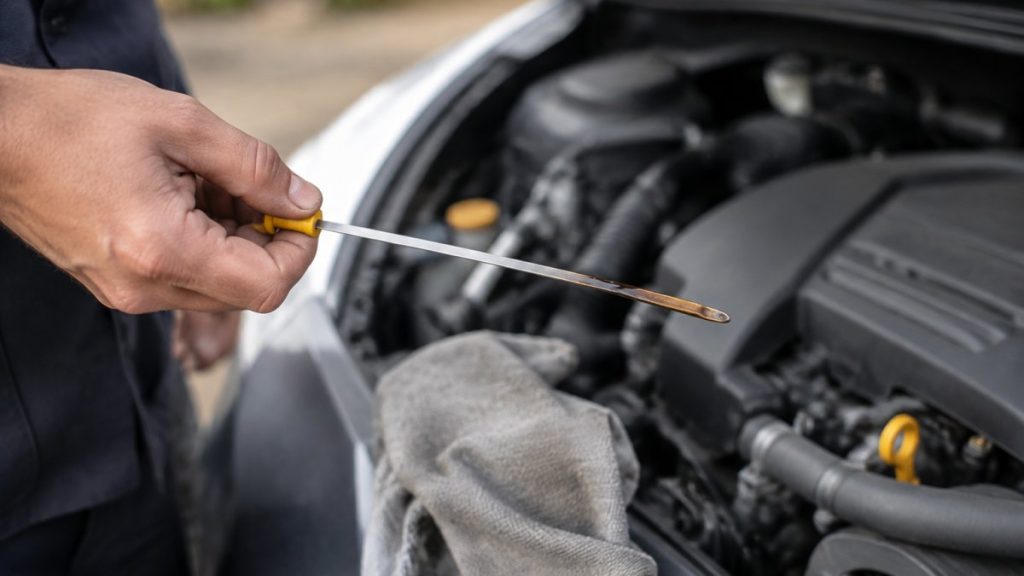
- Checking your engine oil takes two minutes: park on level ground, let the engine cool, then read the dipstick.
Table of Contents
- Why Is My Car Burning Oil? Common Causes
- Car Losing Oil But No Leak and Blue Smoke From Exhaust
- How to Check Engine Oil Level and What to Do Next
- Frequently Asked Questions
Why Is My Car Burning Oil? Common Causes
If your car is burning oil, worn parts let oil past seals and rings into the combustion chamber. High-mileage engines are most often affected, typically through worn piston rings, tired valve seals, and a blocked PCV valve.
A leak drips onto your driveway; burning oil vanishes inside the engine and exits as blue smoke.
Worn piston rings can show as blue smoke, poor compression, and oil-fouled spark plugs. Topping up repeatedly hides the underlying problem while engine wear can continue to grow.
UK government MOT inspection manual on exhaust emissions
Car Losing Oil But No Leak and Blue Smoke From Exhaust
Losing oil with no visible leak can point to internal burning, which is often accompanied by blue smoke from the exhaust.
Blue smoke at cold start usually means valve seals; under acceleration, piston rings; constant blue smoke suggests heavy wear. Fast oil loss can foul spark plugs, damage the catalytic converter, and raise emissions.
For sticky valves and noisy lifters caused by oil burning, our Ametech Super Lubricant reduces friction, frees sticky valves, and quiets noisy lifters.
The colour and timing of the smoke can point to which part is worn.
| Symptom | Likely cause |
|---|---|
| Blue smoke at cold start | Valve seals |
| Blue smoke under acceleration | Piston rings |
| Constant blue smoke | Heavy wear |
| Oil loss with no visible leak | Internal burning |
How to Check Engine Oil Level and What to Do Next
Checking your engine oil takes two minutes: park on level ground, let the engine cool, then pull the dipstick and wipe it clean.
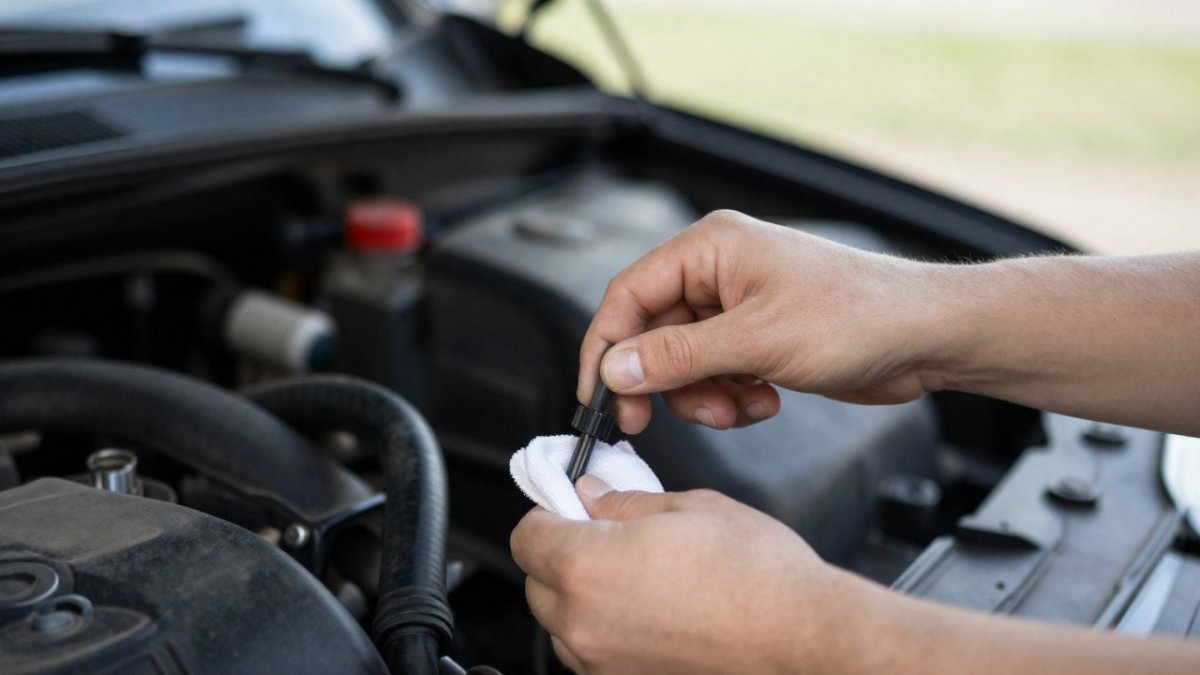
- Park on flat ground and switch off the engine
- Wait a few minutes for oil to settle
- Pull the dipstick, wipe it, reinsert fully, then read the level between min and max
- Check colour and smell, and top up with the correct grade if low
If the level keeps dropping, our anti-friction oil additive reduces wear and improves fuel economy. Unsure? Contact our team for advice before you buy.
A burning-oil problem rarely fixes itself, and ignoring it only speeds up engine wear. At Ametech, we supply professional-grade engine treatments, including our METAL-TEC10-based formulas, that repair worn metal surfaces, restore compression, and lower emissions for petrol, diesel, and classic engines. Get started with Ametech and give your engine the protection it needs.
Frequently Asked Questions
Why is my car burning oil but not leaking?
Oil can disappear without leaving a puddle because it is being burned inside the engine rather than escaping onto the ground. Worn piston rings, faulty valve seals, or a blocked PCV valve let oil enter the combustion chamber, where it burns away with the fuel. You may notice blue smoke from exhaust or a steadily dropping oil level on the dipstick instead of drips on your driveway.
How much oil consumption is too much?
Most manufacturers treat around one litre per 1,000 miles as a rough upper limit for normal consumption, though older high-mileage engines often use more. If you are topping up every few hundred miles, or the oil level drops noticeably between checks, that points to a real fault rather than normal wear. Get it diagnosed before oil starvation damages the engine.
Can I keep driving if my car is burning oil?
Short journeys are usually fine if you check the oil level regularly and top up as needed. Keep driving while ignoring blue smoke, rising consumption, or a flashing oil pressure light and you risk spark plug fouling, catalytic converter damage, and eventually engine seizure. Book a diagnostic check if consumption keeps climbing.
